Denis Batjala, Founder and Project Manager, has spent over a decade in construction across Norway, Latvia, and the UK. He focuses on energy-efficient, durable homes that balance cost, sustainability, and long-term performance. In this interview, he shares insights from his experience leading projects and integrating green building practices.
Can you tell us about your background in sustainable construction and project management? What inspired you to focus on building durable, energy-efficient homes?
I began my career in construction more than a decade ago, starting hands-on before moving into project management. Over the years, I’ve led diverse teams on residential and commercial projects in Norway, Latvia, and the UK. What inspired me to focus on sustainable construction was witnessing how traditional practices often led to wasted materials, higher energy costs, and buildings with shorter lifespans.
In Norway, with its demanding climate, I realized that a well-designed, energy-efficient home is not a luxury but a necessity. My experience has taught me that durability and sustainability go hand in hand: when you choose quality materials, plan for energy performance, and manage the process efficiently, you extend the life of a building while minimizing its environmental impact.
Today, my mission is to combine practical project management with green building practices to deliver homes that are not only functional and cost-effective but also resilient and future-ready.
How has your journey in the construction industry led you to your current role, and what key lessons have you learned along the way?
My journey in construction started at the ground level, literally. I worked as a tradesman before moving into leadership roles, and that experience gave me a deep respect for the people doing the work on-site. Over time, I transitioned into managing projects, leading teams across residential, commercial, and renovation projects in several countries.
Along the way, I’ve learned three key lessons. First, that communication is the foundation of any successful project—when everyone understands the plan, fewer mistakes happen. Second, that good planning is important, but flexibility is essential; construction sites are full of surprises, and the ability to adapt is what keeps a project moving. And third, that quality should never be compromised for speed, because shortcuts almost always cost more in the long run.
These lessons have shaped my current role as a project leader and inspired my focus on sustainable building. For me, success is not only about delivering on time and within budget but about creating buildings that serve people well for decades to come.

Can you share a specific project where you implemented innovative sustainable building techniques? What challenges did you face, and how did you overcome them?
One project that stands out was the construction of two multi-family residential buildings in Ølen, Norway. From the beginning, we wanted to integrate sustainable solutions that would not only meet the client’s needs but also reduce long-term environmental impact. We focused on high-performance insulation, energy-efficient windows, and moisture-resistant materials to handle Norway’s demanding climate.
The challenge came with balancing cost and sustainability. Some of the eco-friendly materials had higher upfront prices, and the client was concerned about budget overruns. To overcome this, I worked closely with suppliers to negotiate better terms and educated the client about life-cycle savings—showing how lower energy bills and reduced maintenance would quickly offset the initial cost. We also optimized the construction schedule to reduce waste and reuse materials wherever possible.
In the end, the buildings performed above expectations in terms of energy efficiency and durability. What I learned is that innovation in sustainable construction is not only about materials or technology—it’s about communication, education, and helping stakeholders see the long-term value of building better.
In your experience, what are the most effective strategies for improving energy efficiency in home construction without compromising durability or aesthetics?
From my experience, the most effective way to improve energy efficiency without compromising durability or aesthetics is to focus on three core strategies. First, invest in the building envelope—proper insulation, airtight construction, and high-quality windows and doors. These are not visible once the home is complete, but they have the greatest impact on performance.
Second, design with orientation and natural light in mind. By positioning windows and using shading smartly, you can reduce heating and cooling needs while making the home more pleasant to live in. Third, select durable materials that age well—wood, stone, and modern composites—because a home that maintains its look and function over decades is inherently sustainable.
The key is to integrate these strategies from the planning stage rather than treating energy efficiency as an add-on. When sustainability is embedded in the design, the end result is a home that looks beautiful, lasts longer, and costs less to operate.
You’ve mentioned the importance of flexibility in construction. Can you describe a situation where adapting your approach mid-project led to a more sustainable or efficient outcome?
On one project in western Norway, we discovered halfway through construction that the soil conditions were less stable than expected, which made the original foundation plan risky and costly. Instead of pushing forward with the same design, we paused to reassess. Working with the engineers, we adapted by using a combination of reinforced shallow foundations and a redesigned drainage system.
This not only stabilized the structure but also reduced the need for deep excavation, cutting down on waste and fuel use. What could have been a setback turned into an opportunity to make the project more sustainable and efficient. By being flexible, we saved both time and resources, while still delivering a safe and durable building.
Leading diverse construction teams can be challenging. What’s your approach to fostering collaboration and ensuring everyone’s expertise is utilized effectively on a project?
I’ve managed teams where people came from five or six different countries, speaking different languages and bringing very different work habits. The first step is always clear communication—I make sure instructions are simple, visual where possible, and that everyone understands their role. I also take time to listen, because many workers have skills or ideas that can improve the job if you give them the chance to share.
I’ve found that respect and fairness are what keep a diverse team working together. When people feel heard and valued, they perform better and support each other. My job as a leader is less about giving orders and more about creating an environment where everyone’s strengths are used in the right place.
Sustainable construction often involves new technologies or methods. How do you balance innovation with tried-and-true building practices to ensure long-term durability?
In my view, innovation should complement proven practices, not replace them. For example, we often use modern energy-efficient materials like advanced insulation or solar-ready roofing systems, but we combine them with traditional methods of weatherproofing and structural reinforcement that have stood the test of time. The goal is always the same—a building that is both efficient and durable.
The challenge is sometimes convincing clients or teams to trust new solutions. To manage that, I usually run small-scale tests on-site or use supplier data to show how the product performs in real conditions. If it passes both the technical and practical test, then I feel confident integrating it. By balancing the reliability of established methods with the potential of new technologies, we create homes that are not only modern but also built to last.
Can you share an instance where you had to make a difficult decision between cost-effectiveness and sustainability? How did you navigate this, and what was the outcome?
One project that comes to mind was a residential build where the client initially wanted to use cheaper insulation materials to keep costs down. While that would have reduced upfront expenses, it would also have led to higher energy bills and a shorter lifespan for the home. I had to present the trade-offs clearly: immediate savings versus long-term efficiency and comfort.
To navigate this, I ran a cost-benefit analysis showing the payback period for higher-quality insulation. I explained that while the initial investment was around 15% higher, the reduced energy use would pay for itself in just a few years. After some discussion, the client agreed to go with the sustainable option.
The outcome was a home that not only performed better but also exceeded the client’s expectations in comfort. That experience reinforced for me that cost-effectiveness and sustainability are not opposites—when explained properly, they are often aligned.
Looking ahead, what do you see as the biggest challenge facing the sustainable construction industry, and how are you preparing to address it in your projects?
Looking ahead, I see the biggest challenge in sustainable construction as bridging the gap between ambition and affordability. Many clients want energy-efficient, eco-friendly buildings, but the upfront cost of green technologies and materials can be a barrier. If sustainability is perceived as something only the wealthy can afford, it will never become mainstream.
To address this, I focus on practical solutions: choosing materials with the best life-cycle value, educating clients about long-term savings, and working with suppliers to find cost-effective options. I also believe investing in training for construction teams is critical—new methods and technologies only succeed if the people on-site know how to use them properly.
Sustainability will only succeed if it becomes accessible, repeatable, and trusted. That’s the mindset I bring into every project: make it green, but also make it realistic.
Thanks for sharing your knowledge and expertise. Is there anything else you’d like to add?

For me, construction has never been only about putting up walls and roofs—it’s about creating places where people can live well for decades. I believe that sustainability and practicality must go hand in hand, because buildings should be both affordable to build and efficient to maintain.
My goal is to keep learning, adapting, and sharing knowledge so that sustainable construction becomes the standard, not the exception.
Share Your Thoughts
We’d love to hear your thoughts on sustainable construction. Join the conversation in the comments:
- Which of Denis Batjala’s strategies for energy-efficient homes stood out to you most?
- How do you balance cost and sustainability in your own projects or lifestyle?
- What challenges have you faced in implementing green practices at home or work?
General Site Disclaimer
The content on Words of the Earth is intended for informational and inspirational purposes only. The views expressed by individual authors are their own and do not necessarily reflect those of the platform. Our articles, stories, and reviews may include subjective opinions and should not be considered professional advice (e.g., medical, legal, financial). While our reviewers may receive complimentary copies of books, they are not compensated for reviews, which reflect their genuine opinions. Readers are encouraged to use their judgment and seek professional assistance when necessary. For more details, please refer to our full disclaimer.
Earthly Links
- About Us
- Book of the Earth Award
- Book Review Requests Step 3
- Bookish Earth
- Disclaimer
- Earth Advocates
- Earthly Interviews
- Earthly Views: An Expert Roundup Series
- Gallery and Credits
- Privacy Policy
- Review Requests
- Terms of Service
- Contact Us
Related Posts
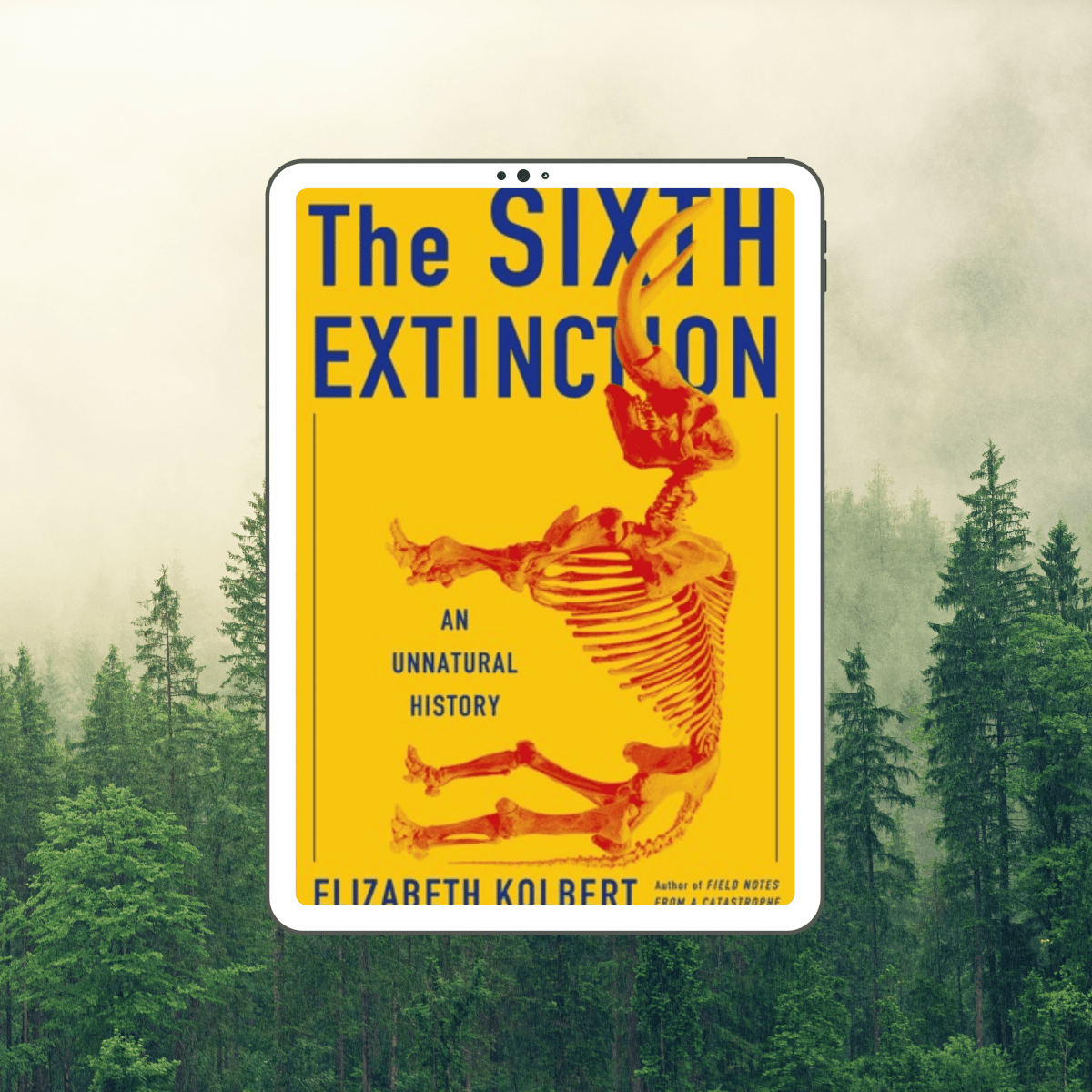
Book Review: The Sixth Extinction by Elizabeth Kolbert
In The Sixth Extinction: An Unnatural History, Elizabeth Kolbert traces the devastating consequences of human activity on Earth’s biodiversity, documenting…

Book Review: We Are the Weather by Jonathan Safran Foer
We Are the Weather: Saving the Planet Begins at Breakfast by Jonathan Safran Foer is a compelling call to action…

Book Review: The Story of Stuff by Annie Leonard
The Story of Stuff by Annie Leonard uncovers the hidden toll of consumer culture on the environment and society, urging…

Book Review: Silent Spring by Rachel Carson
Rachel Carson’s groundbreaking book, Silent Spring, reveals the hidden dangers of pesticides, particularly DDT, and urges readers to reconsider our…
Something went wrong. Please refresh the page and/or try again.
Discover more from Words of the Earth
Subscribe to get the latest posts sent to your email.
 Words of the Earth